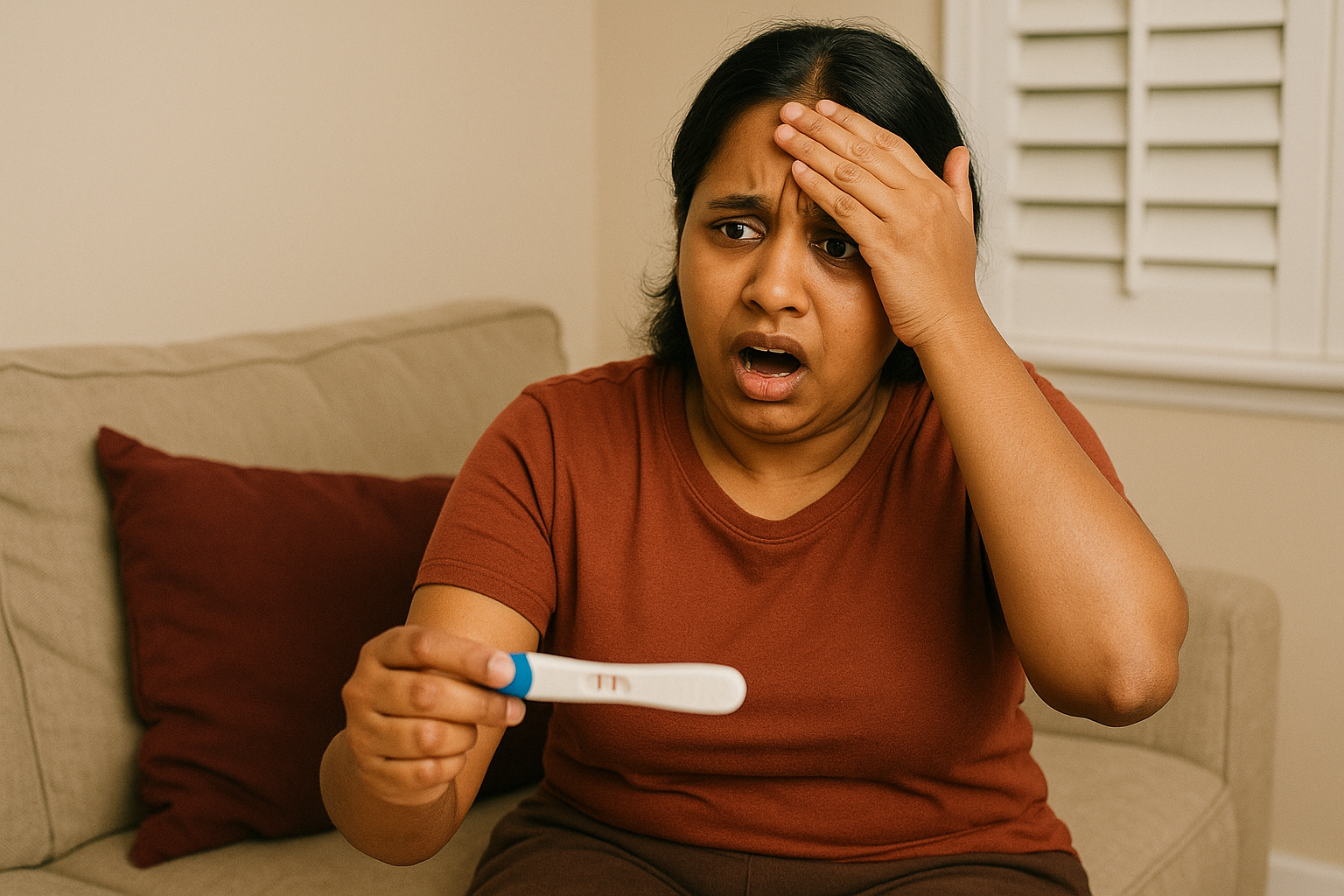
It sounds weird, almost impossible: “How can you get pregnant while bleeding?”
Yet, every month, fertility clinics in India meet couples, especially in their 20s who walk in shocked after a positive pregnancy test. Their first line is almost always: “But doctor, it happened during my period. How is this possible?”
The answer is simple: while pregnancy on period is rare, it is not impossible. And if you’re between 20–30, whether you’re trying to avoid an unplanned pregnancy or planning for a baby, this is a fact you can’t afford to ignore.
Can You Really Get Pregnant During Your Period?
An average menstrual cycle is about 28 days, but doctors consider anything between 21 to 35 days perfectly normal. That’s why not every woman fits into the “Day 14 ovulation rule” we all heard in school.
Here’s the science in simple terms:
- In a 28-day cycle, ovulation usually happens around Day 14.
- But if your cycle is shorter – say 24 or 25 days, ovulation shifts earlier, sometimes around Day 10 or 11.
- Now, add sperm into the mix. They’re like houseguests who overstay their welcome, they can survive inside the female body for up to 5 days, especially if the environment (cervical mucus) is favorable.
Put this together: If you have sex on Day 5 of your period, and your ovulation happens early on Day 10, the sperm are still alive and waiting. That’s when pregnancy during or right after bleeding becomes possible.
Think of it like this: imagine you’re throwing a party (your egg release), but the guests (sperm) show up early and decide to hang around for a few days. Normally, they’d leave before the party starts, but in some cases, especially when ovulation comes early, they’re still there when the doors open. Result? An unplanned “meeting” that can lead to conception.
What makes it tricky is that young adults often lead lifestyles that affect cycles. Stress from exams, work deadlines, late nights, travel, or even sudden weight changes can disrupt hormonal balance and make ovulation unpredictable. That’s why depending only on cycle days as birth control is like relying on Indian trains to always be on time, sometimes they arrive early, sometimes late, and that uncertainty is where surprise pregnancies happen.
Not All Bleeding Means a Period
One of the biggest reasons couples in their 20s get confused is that not every episode of bleeding is an actual period. Your body sometimes sends mixed signals, and it’s easy to misread them.
Here are the common scenarios:
- Implantation bleeding → This happens when a fertilized egg attaches to the lining of your uterus. It’s usually lighter than a period and comes earlier than your expected cycle. Many women mistake this for a light period, but by then pregnancy has already started.
- Hormonal spotting → Stress from exams, late nights at work, travel, or even starting/stopping birth control pills can cause light spotting. It may look like a period but isn’t one.
- Mid-cycle bleeding → Some women bleed a little around ovulation (called ovulatory spotting). If you don’t track cycles, you might assume this is a period.
This confusion is dangerous because it makes couples feel “safe” when in fact they may be in their most fertile days.
Think of it like mistaking the rehearsal for the main concert. If you assume the rehearsal (spotting) was the actual show (your period), you’ll completely misjudge the timing and that’s when pregnancy surprises happen.
Why Using Period Sex as Birth Control Is Risky
Many young couples think: “We don’t need condoms if it’s during periods. It’s the safest time.”
But here’s the problem, biology doesn’t follow your assumptions. Using your period as a birth control method is like trying to cross a busy Indian road with your eyes closed. You may make it across a few times without an accident, but one wrong step and everything changes.
Here’s why period sex is unreliable as contraception:
- Cycle variability: Your cycle isn’t a fixed 28 days every month. Stress, travel, illness, or late nights can shift ovulation earlier or later.
- Sperm survival: Even if you bled for 5 days, sperm from Day 5 sex can still be alive on Day 10 when ovulation occurs.
- False sense of safety: Some women mistake spotting or hormonal bleeding as a period, but it may actually be their fertile window.
- No STI protection: Period sex without condoms not only risks pregnancy but also increases the chance of transmitting infections because the cervix is slightly more open during bleeding.
In short: relying on “safe days” is like betting on the toss of a coin. It may land in your favor a few times, but eventually, the odds will catch up.
Real Story From a Couple in Their 20s
At Gulmohar IVF, Panchkula, a newly married couple in their late 20s walked in, visibly shaken. The wife said:
“Doctor, I was on my period. We didn’t use protection because we thought it was safe. But my test turned positive. How is this possible?”
After reviewing her history, Dr. Renu Lamba found that her cycle length was just 25 days, meaning she ovulated much earlier than expected. The sperm from Day 5 of her period were still alive on Day 10 and fertilization happened.
This wasn’t an isolated case. We’ve seen similar situations where couples miscalculated their fertile window and ended up surprised by pregnancy. In fact, many women later admit they didn’t really understand their cycle until they sought help. That’s why learning to track ovulation correctly can make all the difference, whether you want to avoid pregnancy or plan for it.
For couples trying to conceive, knowing your body’s signals is crucial. You can read our guide on early signs IVF is working or learn more about how lifestyle affects IVF success to see how small factors change big outcomes.
Safer Ways to Avoid Pregnancy (Even During Periods)
If you’re in your 20s and not ready for a baby, relying on period sex as “protection” is risky. Doctors at Gulmohar IVF recommend proven, science-backed methods that actually work:
- Condoms → Easy, affordable, and also protect against STIs. Many couples ignore this during bleeding, but it’s still the safest first-line option.
- Birth control pills → When taken correctly, pills prevent ovulation altogether, giving you more control over your cycle.
- IUDs or Implants → Long-term, low-maintenance options, often chosen by busy young couples.
- Cycle tracking apps → These can help you understand fertile days, but they’re useful only if your cycle is very regular.
Think of it like this: would you rather trust a mobile app’s weather forecast for your wedding day, or book a proper indoor venue to be safe? The same logic applies here.
At Gulmohar IVF, we often see couples who relied on myths and ended up stressed. Whether you’re trying to avoid pregnancy or planning parenthood, learning about your cycle is the first step.
What If You Suspect Pregnancy After Period Sex?
So, you had unprotected sex during your period… and now your mind won’t stop racing.
“What if I’m pregnant? But I was bleeding… so isn’t that safe? Should I run for an emergency pill? Should I wait? What if my period is late next month?!”
Relax. You’re not alone, these are the exact thoughts most 20–30 year olds have when this situation happens. Instead of panicking or Googling random answers at 2 AM, here’s a calm step-by-step plan:
- Wait 10–14 days before testing
A pregnancy test looks for the hormone hCG, which only rises after implantation. If you test too soon, it’s like checking your marks before the teacher has uploaded them and the result isn’t ready yet. - Take a home pregnancy test
They’re cheap, easily available at any pharmacy, and pretty accurate when used at the right time. If it shows positive, there’s no need to overthink like you’re pregnant. - If negative, but you feel “off,” retest
Many women say, “I felt different even though the test was negative.” That gut feeling matters. If your breasts are sore, you feel unusually tired, or your period still hasn’t come, test again in 3–4 days. Sometimes the hormone takes longer to show up. - Don’t mistake bleeding for safety
This is the biggest myth. You might think, “I was bleeding, so I can’t be pregnant.” But spotting from implantation or hormonal imbalance can look like a light period. If in doubt, always assume pregnancy is possible until proven otherwise.
Think of it like checking exam results online. If you log in too early, the page might say “Results not available.” That doesn’t mean you failed, it just means you checked at the wrong time. Pregnancy tests work the same way. The timing is everything.
Key Takeaways for 20–30 Year Olds
If you remember nothing else, remember this: period sex is not a guaranteed safe zone.
Here’s the truth in simple points:
- Pregnancy on period is rare, but real → Ovulation can come early, sperm can survive for days, and bleeding isn’t always what it looks like.
- Your body isn’t a calendar app → Stress, travel, weight changes, and lifestyle in your 20s can shift ovulation anytime.
- Spotting ≠ period → What you think is a period could actually be implantation bleeding or hormonal spotting.
- Protection matters every time → Condoms or other methods are safer than assumptions.
👉 Many couples only realize how unpredictable cycles are when they struggle to conceive. If you’re curious, you can explore our blog on common causes of infertility or understand fertility tests every couple should know. Even if you’re not planning a baby right now, knowing this can save you a lot of stress later.
And for those actively planning, understanding the fertile window is a game-changer. Miscalculating ovulation is one of the most common reasons couples in their 20s struggle longer than necessary.
Final Word
Pregnancy on period isn’t common, but it happens and it often takes young couples by surprise. If you’re in your 20s, don’t rely on myths or half-knowledge. Know your body, track your cycle, and use protection if you’re not ready for parenthood.
As Dr. Renu Lamba says: “Every cycle tells a different story. Don’t leave your future to chance instead understand it.”
Disclaimer: This article is for educational purposes only. Please consult a qualified fertility specialist for diagnosis and treatment options.