Why this question matters in India
It often sounds unbelievable to young couples when we explain that pregnancy can happen even while bleeding. For years, many have been told that periods are a natural contraceptive – so-called “safe time.” In India, especially for couples in their 20s and 30s, this belief is still passed down by elders as family wisdom. Yet at Gulmohar IVF, Panchkula, we regularly meet women who became pregnant despite having sex during their periods. They arrive shocked, repeating the same question: “Doctor, how is this even possible?”
The truth is simple: biology doesn’t always follow a textbook. The average menstrual cycle is 28 days, but cycles ranging from 21 to 35 days are normal. Ovulation,the release of an egg usually happens around Day 14, but research shows that 1–2% of women ovulate unusually early. Combine that with the fact that sperm can survive in the female body for up to 5 days, and suddenly the “safe zone” during periods doesn’t look so safe anymore.
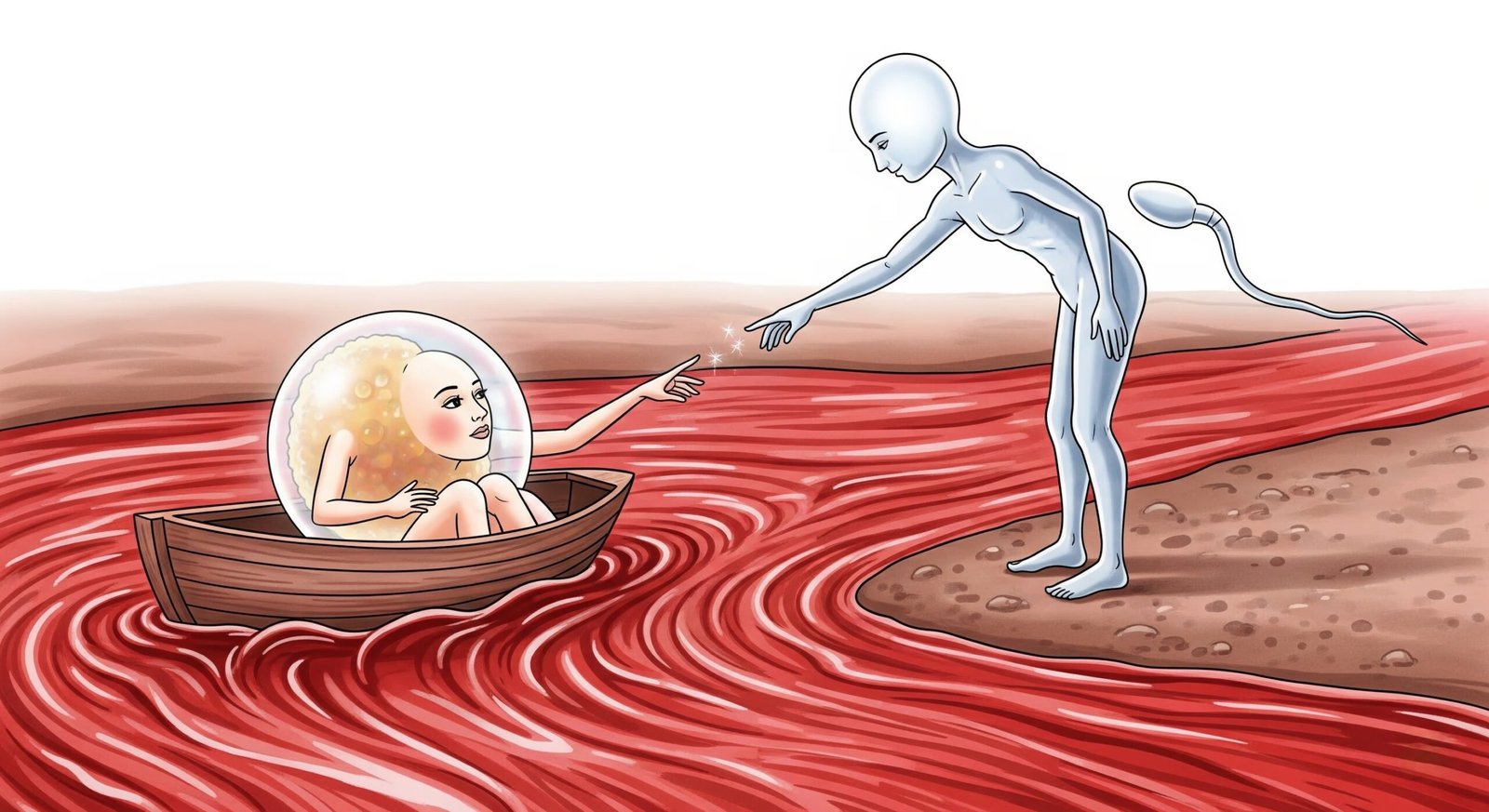
Think of it like a train schedule: your period is the cleanup crew after one train departs, and ovulation is the next train arriving with the egg. Normally, there’s a gap. But if the next train shows up early and the last passengers (sperm) are still waiting at the platform, they meet. That’s how pregnancy on period, though rare, becomes very real.
Can you really be pregnant while bleeding
Yes, you can. Although uncommon, it happens more often than most people realise. What looks like a period may actually be implantation bleeding, which occurs when a fertilised egg attaches to the uterus lining. Research shows that implantation bleeding affects up to 25 percent of women in early pregnancy. Some women also experience hormonal or breakthrough bleeding, especially if they are on contraceptives. And for those with shorter or irregular cycles, ovulation can happen closer to the bleeding days, making pregnancy possible.
The science explained simply
A typical cycle lasts around 28 days, with ovulation around day 14. But not every woman follows this textbook cycle. Some ovulate earlier, some later. Now consider sperm survival. Sperm can live inside the female reproductive tract for three to five days. This means if intercourse happens during bleeding and ovulation follows shortly after, sperm may still be alive to fertilise the egg. To picture this, imagine ovulation as a train that sometimes arrives early. The sperm are like passengers waiting at the station. If they entered during bleeding and the train comes sooner than expected, the meeting still happens.
How to tell the difference between bleeding types
Menstrual bleeding is heavier, red, and lasts three to seven days, often with cramps. Implantation bleeding is lighter, pink or brown, and usually lasts only a day or two. Breakthrough bleeding from contraceptives tends to be light and irregular. Recognising these patterns helps couples avoid confusion, yet even experienced women sometimes misjudge what they see.
How likely is pregnancy during bleeding
On the first two days of heavy flow, pregnancy is very unlikely. The uterine lining is being shed and conditions are less supportive for sperm survival. But as bleeding lightens, the risk increases, particularly for women with cycles shorter than 25 days. According to NHS data, the fertile window can vary by as much as seven days even in women with regular cycles. This unpredictability is why doctors do not recommend relying on bleeding days as a method of birth control.
When bleeding is a warning sign
Not every bleed is harmless. In early pregnancy, heavy bleeding with severe cramps, fainting, or clots could signal miscarriage or an ectopic pregnancy. These complications need urgent medical care. On the other hand, light spotting may be normal implantation bleeding. Couples should never ignore unusual symptoms, especially if pregnancy is possible.
Real experience from practice
A 27-year-old woman in Panchkula came to us worried. She had bled lightly around her expected period date and assumed it was normal. A month later, when nausea started, she tested and found she was pregnant. What she thought was her period was actually implantation bleeding. Cases like this remind us that periods and pregnancy can overlap in ways that surprise even educated women.
What couples should do
If you are avoiding pregnancy, do not depend on bleeding days. Always use contraception. Condoms, pills, and long-acting reversible methods are safer. If you are planning a baby, track your ovulation with apps or calendars rather than relying only on dates. You can read more in our article on Ovulation Tracking: How to Increase Your Chances of Conception. If your bleeding feels different, take a home pregnancy test after a few days or consult a doctor for clarity.
The emotional side
For many couples, discovering a pregnancy during bleeding brings stress and self-blame. Women feel guilty for not recognising their body’s signs, while men often feel helpless. In Indian households, where family pressure about children is intense, this confusion can even lead to arguments. It is important to remember that cycles are complex and myths are widespread. Couples deserve reassurance, not judgment.
Key takeaways
Pregnancy while bleeding is rare but possible. It happens due to sperm survival, early ovulation, irregular cycles, or implantation bleeding. Statistics show up to one in four pregnant women may notice bleeding in early pregnancy, and sperm can survive up to five days inside the body. Together, these facts explain why the “safe period” idea is unreliable. If in doubt, test and talk to your doctor.
Related reading
- IVF in Panchkula: Complete Guide
- After 35: What Panchkula Couples Must Know Before IVF
- The Diet That Boosts IVF Success
- Common Causes of Infertility: When to Seek a Specialist
Want to speak to a fertility expert? Book a private consultation with Dr. Renu Lamba at Gulmohar IVF: Click here.
Disclaimer: This article is for educational purposes only. Please consult a qualified fertility specialist for diagnosis and treatment options.