
Imagine trying to store mangoes from summer so you can enjoy their sweetness in winter. Egg freezing works in a similar way for fertility. It lets you preserve your healthiest eggs at a younger age, so you can use them when you are ready for motherhood. For many women in Panchkula and nearby cities, this option is bringing both peace of mind and control over their future.
At Gulmohar IVF, Panchkula, we specialize in helping women understand if and when egg freezing is right for them. This article explains the process, benefits, risks, and the right age to consider egg freezing in simple language that connects science with everyday life.
What is Egg Freezing?
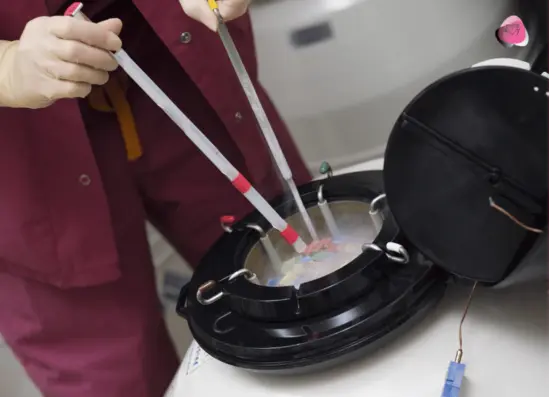
Egg freezing, also known as oocyte cryopreservation, is a medical technique that allows women to preserve their eggs for use in the future. The process involves stimulating the ovaries to produce multiple mature eggs, retrieving them through a short procedure, and then freezing them at extremely low temperatures using a method called vitrification.
Vitrification is like “flash freezing”, the eggs are cooled so quickly that ice crystals cannot form, which protects their delicate structure. These eggs are then stored in liquid nitrogen at –196°C, where their quality remains intact for years.
Think of it this way: just as grains stored in airtight containers stay fresh for seasons, frozen eggs remain safe and usable even after a decade or more. Later, when you are ready for motherhood, these eggs can be thawed, fertilized with sperm in the lab, and transferred as embryos into the uterus through IVF. In simple words, egg freezing is a way of “saving your younger eggs today” so you can use them tomorrow when the time feels right.
Why Do Women in India Consider Egg Freezing?
Indian society is changing faster than ever before. A generation ago, most women got married in their early 20s. Today, it’s common to see women in cities like Panchkula, Chandigarh, and Delhi marrying closer to 30. Many choose to first focus on higher education, building stable careers, traveling, or waiting for the right life partner. These are empowering choices, but biology doesn’t always wait for our timelines.
Unlike financial savings in a bank account that can keep growing, a woman’s fertility is finite. By the time a woman turns 30, the number of healthy eggs begins to dip. By 35, the decline becomes sharper, and by 40, natural conception becomes challenging (CDC). It’s almost like the “fertility hourglass” starts running faster with age.
Egg freezing acts like a pause button on this biological clock. Just as students save notes for future exams or families preserve pickles for the off-season, egg freezing allows women to preserve their younger, healthier eggs today and use them later when the time feels right. This way, women don’t have to choose between career and motherhood, they can embrace both, at their own pace.
For many women in Panchkula, egg freezing is not just a medical choice but also an emotional reassurance. It offers freedom from constant questions like “shaadi kab karogi?” or “ab bacche ki planning hai kya?” and lets women focus on life goals without the pressure of running against time.
Who Should Consider Egg Freezing?
Egg freezing is not only for women delaying pregnancy for career or lifestyle reasons. In reality, there are many life situations where it becomes a wise and proactive medical decision. Here are some groups of women who may benefit most:
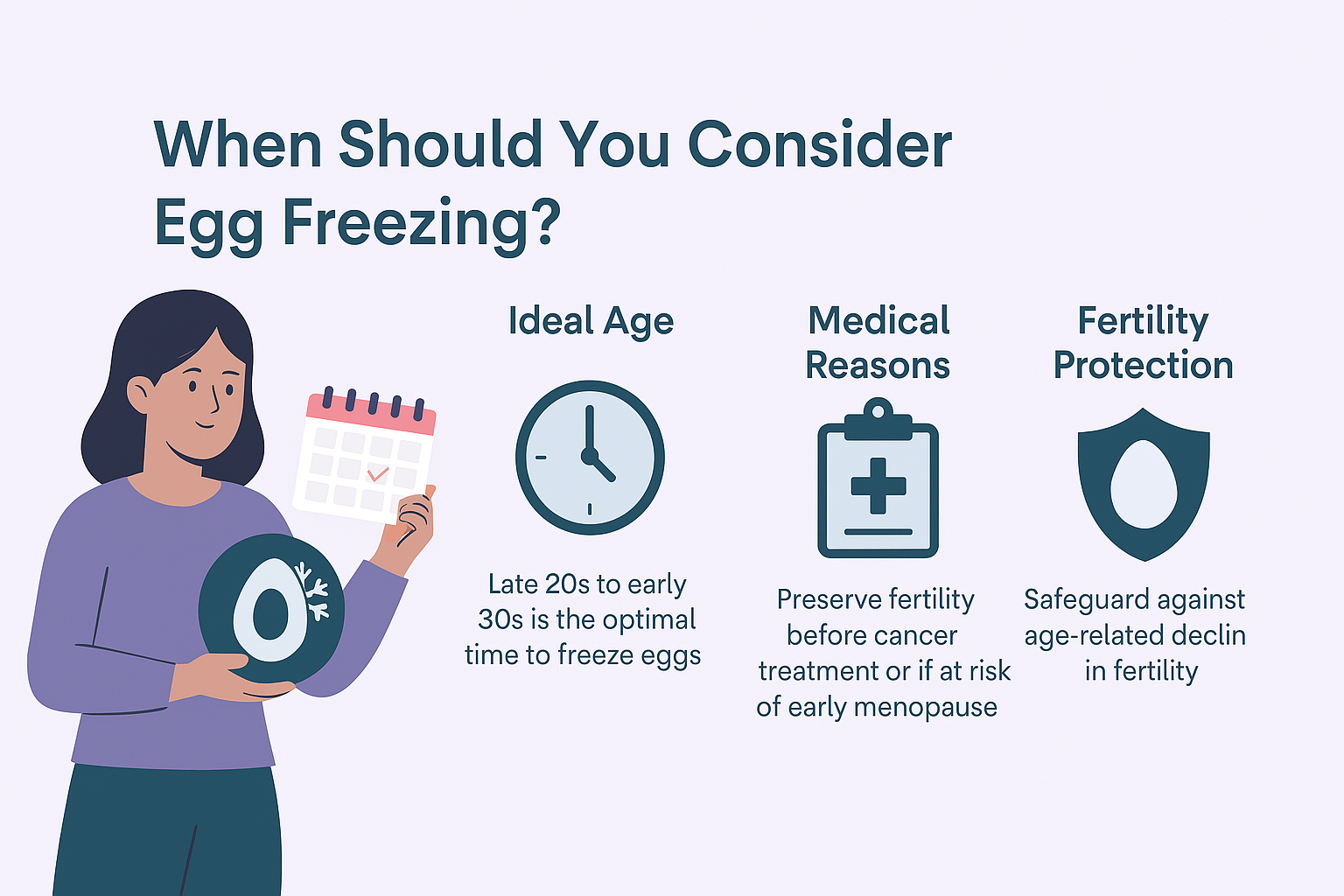
- Women in their late 20s to early 30s: This is considered the golden age for fertility. Eggs collected at this stage are healthier and more likely to lead to a successful pregnancy later. Freezing eggs during this time is like locking away your best-quality seeds in a safe for future planting.
- Those focusing on education or career: Many women today wish to pursue higher education, international opportunities, or career growth before starting a family. Egg freezing removes the stress of the “ticking clock” and gives flexibility to return to parenthood when the time feels right.
- Women approaching 35: After 35, egg quality and number start to decline more sharply. Freezing eggs at this point acts like an insurance policy, protecting against future regret. It ensures you are not forced into rushed family decisions later in life.
- Patients undergoing medical treatment: Certain medical conditions and treatments, especially chemotherapy, radiation, or surgeries involving reproductive organ, can damage or destroy eggs. For women diagnosed with cancer or autoimmune diseases, freezing eggs before treatment is highly recommended.
- Those with family history of early menopause: Genetics can play a role in early ovarian decline. If your mother, sister, or close relatives experienced menopause earlier than average, you may also be at higher risk. Freezing eggs in your 20s or early 30s can act as a proactive safeguard.
In short, egg freezing is about choices. It’s not about delaying motherhood forever, it’s about giving yourself the flexibility to decide when you are truly ready, without being cornered by biology or circumstances.
Related read: How Age Affects Fertility and Ways to Improve Chances.
Step-by-Step Process of Egg Freezing
Many women imagine egg freezing as a long and stressful medical journey. In reality, the process is usually completed in just 10–14 days. Think of it like preparing for an important exam — you spend a few days in preparation, undergo the main test, and then store the results safely for the future. Here’s how the journey unfolds:
1. Ovarian Stimulation
In a natural cycle, your ovaries release just one egg. For egg freezing, doctors prescribe hormone injections to gently stimulate your ovaries to produce several eggs at once. This improves the chances of collecting enough mature eggs for storage. These injections are self-administered and cause only mild bloating or mood swings, similar to PMS symptoms (Johns Hopkins Medicine).
2. Monitoring
During this stage, you’ll visit the clinic a few times for ultrasound scans and blood tests. This helps doctors track the growth of your follicles (small sacs in the ovaries where eggs develop) and adjust medications if needed. Think of it like a farmer checking the ripening of crops before harvest, the timing has to be just right.
3. Egg Retrieval
Once the eggs are mature, a short procedure called egg retrieval is performed. It usually takes only 20–30 minutes and is done under mild sedation or anesthesia, so you won’t feel pain. Using a fine needle guided by ultrasound, the doctor gently collects the eggs from the ovaries. Most women are able to go home the same day and resume light activities by the next morning.
4. Vitrification
The collected mature eggs are then preserved through a technique called vitrification. Unlike slow freezing, vitrification is a “flash-freeze” process that prevents ice crystals from forming inside the egg. The eggs are cooled instantly to –196°C and stored in liquid nitrogen tanks. In this frozen state, their quality remains stable for many years (NIH – PMC Journal).
Personalized Care at Gulmohar IVF
Each step of egg freezing is carefully monitored by fertility specialists to ensure both safety and comfort. At Gulmohar IVF, Panchkula, we walk patients through every detail, from counseling about injections to post-retrieval recovery tips, so you always feel supported and confident in your decision.
Best Age to Freeze Eggs
Fertility experts around the world agree that the best age range for egg freezing is between 27 and 34 years. Women can still freeze eggs after 35, but success rates gradually decrease.
- 27–34 years: Ideal time, eggs are healthiest.
- 35–37 years: Still possible but may need more cycles.
- 38+ years: Lower chances, but an option for those who cannot delay.
Related read: IVF Success Factors: Lifestyle, Age & Medical.
How Long Can Frozen Eggs Be Stored?
One of the biggest advantages of vitrification is that eggs do not “expire” quickly. They can be stored for 10–15 years or longer depending on country regulations (UK HFEA). The freezing process keeps them in a suspended state, just like food preserved in deep freeze remains fresh.
Is Egg Freezing Safe?
Yes, egg freezing is considered a safe and reliable procedure. Research shows that babies born from frozen eggs are as healthy as those conceived naturally.
The main side effects are temporary, mild bloating or mood swings from hormonal injections. The egg retrieval procedure is short and done under anesthesia. Importantly, egg freezing does not speed up menopause or reduce fertility if you try to conceive naturally later.
Why More Indian Women Are Choosing Egg Freezing
A decade ago, egg freezing was hardly spoken about in India. Today, with better awareness, advanced labs, and societal change, more women are openly considering it. In metropolitan areas and Tier-2 cities like Panchkula, women are realizing it is not about “delaying motherhood,” but about keeping doors open.
According to a 2023 survey, interest in egg freezing among Indian women increased by nearly 40% over the last five years.
Costs of Egg Freezing in India
The cost of egg freezing in India usually ranges from ₹80,000 to ₹1.5 lakhs per cycle. Additional yearly storage charges apply. The exact cost depends on your health, medications required, and number of cycles. For details, read our dedicated guide: IVF Cost in Panchkula.
Benefits of Egg Freezing
- Peace of mind: Removes the pressure of the “biological clock.”
- Medical safety: Protects fertility before cancer or autoimmune treatment.
- Flexibility: Gives freedom to focus on career, travel, or personal goals.
- Family planning: Allows planning pregnancy when you and your partner are emotionally ready.
Limitations to Keep in Mind
Egg freezing improves chances but does not guarantee pregnancy. Success depends on many factors, including sperm quality and uterine health. Some women may need multiple cycles to collect enough eggs. These realities are important to discuss with your doctor before starting.
Want to speak to a fertility expert? Click here to book a private consultation with Dr. Renu Lamba at Gulmohar IVF.
Disclaimer: This article is for educational purposes only. Please consult a qualified fertility specialist for diagnosis and treatment options.